Wednesday, June 22, 2011

Guest post - Turning the Page

Today was my last full day in Ukraine, so Ricky has invited me to write a guest post on his blog. As you know, this trip was conceived by Ricky as part of his research into his grandparents' histories. Ricky's heritage is unusual in many ways. Being the grandson of four survivors of the Holocaust, and having as much information as he has about each of their stories is a gift. His heritage is one of strength, courage, perseverance, loyalty, humanity and faith.

We began our day entering an church on the main square in Ternopil in order to view archives which are kept there. Certain records for my mother's town of Zborow are stored in that region's archives. We went hoping to view voting records for several years in the 1920s, as well as Jewish Community organization logs for the 1930s. My mother told me that when she was younger, her mother was very active in society groups, and attended meetings in the evenings on a regular basis. Viewing these records would give us a chance to see our grandparents' and great grandparents' names in writing; to see that they were active members of their community.

Our guide wasn't hopeful that we would find any meaningful information. He told us that records are often mislabeled, that records of organizations are just minutes of meetings and don't list members, and that it would be very time consuming to go through all the papers which are written in Polish. Despite, that, we asked to see the records, and thanks to our guide's good relationship with the archivist, we got the records in an hour, rather than having to request them days in advance. Our guide handed us a thick file of voting records for 1927 and 1928. Ricky and I took deep breaths before beginning our search. And then we turned the page, and right there on the first page was a listing of my great-grandparents, and my great uncles on my mother's side. I had never known my great- grandmother's name, nor any of the great uncles' names or ages. It was so exciting to see their listing! A few minutes later, our guide jumped up across the room, and came over to us holding another thick folder of yellowed papers. He said "look- I found something! Your great-grandfather was a treasurer of Agudath Israel! And your great uncle was the vice-president!" We saw the minutes of the meetings, along with my relatives' signatures at the bottom of the pages. That must have been why my grandmother was also involved in organizations. It was what the family did.

This afternoon we left Ternopil to travel to Lviv where I am to depart from, where Joe (Ricky's dad) is to arrive, and where more archives are located. The archives in Lviv hold information about the residents of Zborow and Kolomyja dating back to the 18th century. I will not be here when Ricky receives the records he requested, but I'm hopeful that he will be successful in tying together more loose ends in his quest for information.

In the meantime, we spent our afternoon here walking the streets of Lviv. What a different atmosphere from the smaller cities, towns and villages we have visited in the last few days. It was refreshing to see a wide variety of people, age groups, clothing and big buildings. At one point on the main square, we witnessed Ukraine's official Day of Mourning marked by an assembly and show of flags. It was a time to remember all the Ukranians lost during World War II. It was strange, that just like in America, mostly older people were there to memorialize those victims. The young people on the periphery of the square walked by in their jeans and high heels (how do they walk in those things on cobblestones?) not showing any evidence that the War had any effect on them.

Ricky is now giving me a look that says "you're writing too much", so I'm going to say goodbye for now.

Entering the Archives in Ternopil


Council of Ukrainian Elderly meeting in the park

Watching the Day of Mourning Gathering

Tuesday, June 21, 2011

An uphill battle

This morning we ventured into the villages surrounding Zborow to see if anyone remembered hearing about Marisia hiding a group of Jews, including Mama Manya, on her farm. Picture this: we turn off of the main road onto a dirt road leading to one such village, in what feels like the Ukrainian version of a jungle. We see an old woman on the side of the road, we ask her if she remembers a name or part of a story, and even if she doesn't, she keeps us captive for at least the next fifteen minutes. We let her into our car, she directs us where to go, and brings us to all of her friends' houses, whom she thinks might be able to help. We get out at each house, meet the next person, and as the group of us gets bigger and bigger, there's more and more back and forth chatter about who did this, or who owned this property, or who worked where. After a few of these experiences, we met one woman who directed us to Stefana, who directed us down a hill, through a field, and up another hill to Klima's house. We met Klima and her husband as they returned from working in the field, and when we mentioned that we knew Marisia, they began telling all the stories they could remember about Marisia and her family--about where they lived, their lives before and after the war, and how they were hiding Jews. Just like yesterday, when we found someone who remembered Mama Manya's family, it was a crazy feeling to hear someone so many miles away tell the same stories we knew about Marisia and her family.

Anyway, later in the day, we returned to Zborow to see Mama Manya's school and house, as well as the memorial to the Jewish community from Zborow. We also revisited the technical department to see if they had any information about house #32, since the information we received about #30 was no longer relevant. Yesterday, they were all interested in hearing about our search, were willing to pull out the records, and showed us everything they had about that house. Today, however, even though it was the same people working there, and the same type record we were looking for, they claimed they couldn't be of much help. Without checking any lists or databases of records, they said that no such record about #32 existed. We were skeptical, but it seems like that's the way things work around here. You'll have luck one day, and not the next, people will choose to help you one day, and not the next. The next few days will mark the end of the first half of my "hometowns" leg of my trip, and we'll spend these days in the archives here in Ternopil and in Lviv searching for school records, taxpayers lists, Jewish community records, and so on. Just like the inconsistent help at the technical department, the records are very inconsistent. There will be a record of births from a given town for the years 1815-1865, but not for any years in the 20th century. There will be a census from 1780, but not for any other year. There might be a property owners list for the 19th century in one archive, but another list from the 20th century in another distant city. Anyway, we're trying to see all we can in the next few days to fit as much as we can together. Then off to my dad's parents' hometowns. Wish us luck for our first venture into the archives!

Some of the Ukrainian villagers

The couple who remembered Marisia

Mama Manya's Polish school in Zborow

In the basement of Mama Manya's childhood home


Monday, June 20, 2011

It's a small world after all

A little back-story before I delve into what we did today: Out of my four grandparents, I got to know my mom's mom, Manya Birnberg (whom we called Mama Manya), the best. Before she passed away this past August, I was able to interview her pretty extensively about her experiences during the Holocaust, but also about her life before the war. Mama Manya was born in Zborow, a town in what was then part of Poland. The town was small, so many people knew each other anyway, but Mama Manya's family was very prominent in their town since they owned a number of different businesses: her father owned a brewery that produced and sold vinegar. He also owned a flour mill, and her grandfather owned a lumberyard. Mama Manya's family lived in her grandfather's house, which they shared with her grandfather and two other branches of her family. She always described her childhood home as a villa: a large house with a staircase leading up to double doors that was divided into 4 apartments, with the mill on one side, and a park on the other. On a form that she filled out after the war, she listed that the house was built out of "well-fired Polish bricks." She also said that her house was on the same street as the mayor's office, and whenever her father visited the mayor, he greeted her father and offered him a seat in his office. Then, when everyone was placed into the ghetto, Mama Manya's family received a letter from another family that was being hid by a Polish Catholic teenager, Marisia. Marisia was offering to take in another family, so Mama Manya's father sent his wife, her mother, to hide with Marisia. The local Nazi authorities realized that someone was missing, so threatened to kill an amount of people if she didn't return. Mama Manya's mother returned to the ghetto, but a few days later, it was liquidated anyway. Right before the liquidation, Mama Manya managed to escape from the ghetto, and with the help of a Ukrainian man whom her sister knew from school, Yankevitch, arrived at Marisia's house, where she stayed underground until liberation by the Russians.

With all of this information in mind, we traveled to Zborow, about a 30 minute car ride from Ternopil. We took a picture with the sign marking the town as two cows and a farmer walked by. Marisia had been back in Zborow in 1994, and when she was there, she took a picture of what she remembered as Mama Manya's house on at 30 Sobieskiego Street. However, Mama Manya always said that this picture was of a different house. Still, we started off our visit by finding that house. The whole town turned out to be centered around one, short, main street, and we figured out that this main street was Sobieskiego, based on some old pictures. We found the house that Marisia thought was Mama Manya's pretty quickly, but as we pulled up to park, I noticed that the next house over had a staircase leading up to a double door, but the house seemed too tall to be Mama Manya's, at least according to her descriptions. We examined #30, which Marisia claimed was Mama Manya's, but we couldn't tell if this building was the original, or if it was built after the war. We went to the town's technical department, where they have building records, to try and figure out when the house was built. Still, so far, things were making sense--the house was on the same street as the town hall, and there was plenty of room in the backyard for a mill and lumberyard. But, when we got to the technical department, they showed us a record that the building at #30 was built in 1955, so this could have been where Mama Manya's house was, but it definitely wasn't the same house. We then went to the town museum, since the old man who worked there was rumored to have known some information. When you open the front door to this museum, a sensor plays "It's a Small World After All" until you shut the door--a weird Ukrainian quirk, but we thought that it might be a sign. It turned out that the old man there was born in another town, so he hadn't heard of Mama Manya's family, but he showed us some pre-war pictures of the town. On a whim, we decided to visit the archival department of the town, even though it was likely they wouldn't have any records from before the war. They didn't, but we asked about our family names anyway: Mama Manya's maiden name, Nisenbaum, and her mother's maiden name, Wolfzahn. Just before we were going to leave, we asked the archivist there, Maria, if she had heard of a Yankevitch family. She replied that she knew the family very well, and that one member of the family, Olga, who was born in Zborow in 1923, was still living, and that she would take us to meet her.

We all jumped in the car to visit Olga, a small, wrinkled Ukrainian woman who spoke with a very high voice. She sat us down in her living room, and Alex (our guide) explained to her who we were. He asked her if she remembered the name Nisenbaum from before the war, and she responded with a very enthusiastic, "tak! tak!" (yes, yes!). "they lived on the main street!" She continued (in Ukrainian of course), "I can't remember what business they had, but maybe they sold vinegar? And they didn't just sell it, they made it too." Well, by this point we were excited, smiling, laughing, crying, nodding--more emotions than you can list. Someone in the town still remembered them! We asked her more questions and showed her pictures, and then we asked her about her family, since Yankevitch was also the name of the man who helped Mama Manya get to Marisia, and one of Mama Manya's sister's friends from school. We asked Olga when her brother was born. She replied 1918. We asked Olga what her brother's job was. She replied that he was a German teacher in the local school. We knew that Mama Manya's sister was born in 1922 and was studying to be a teacher, so again, everything was starting to align--this had to have been the same Yankevitch! Olga's brother had passed away many years ago, but she remembered that he was friends with some other Jewish people from the town. We then asked her if she remembered which house the Nisenbaum family lived in. She replied that it was still there, but that it used to be a one story building, but in later years another floor was added. And, the numbering was changed on the main street, so the house was no longer #30, it's now #32--the "too-tall" house I noticed with the stairs leading up to the door! So, not only did we learn of the real location of Mama Manya's house, and not only did we meet someone who remembered her family, but her house was still there! Maria from the archives drove us over to the house to make sure we looked at the right one, and indeed, it was the one with the stairs. We took some time taking pictures of the outside, and we also went inside--now it's divided into 10 different apartments. We went to see the back of the house, and there, a little to the left, was a small park! Then, an old man came up to us and started talking to us. He was talking about how the house was very old, but another floor was added in recent years, and that there used to be a flour mill behind the house! Everything had fallen into place. This was the right location, and this was the house. Well, by now, it seemed like the whole town was crowding around us, and people were looking out the windows of the top floor of the house. One man yelled down to us, then came outside and shook our hands. Alex told us that he was a former mayor of the town. Mama Manya's father used to be invited into the mayor's office, and here was a mayor living in what was Mama Manya's house! Anyway, he was very excited to tell us all about the house, and he and the other old men from the house took us into the cellar to see the original bricks. They began pulling out various bricks and arguing about whether they were Soviet or Polish, and they looked all over for anything original from the house. We didn't find anything, but they pulled out a brick--a "well-fired Polish brick" with the original stamp on it for us to keep. We told them to keep looking, since we'll be back tomorrow. It was a whirlwind of a day, one that began with disappointment but ended with excitement and contentment.

Tomorrow we're going back to Zborow to see the house again and Mama Manya's school, as well as the neighboring villages--including the one that Marisia was from. We'll also visit the ghetto area of the town and a memorial site to the town's Jewish inhabitants. But, today we definitely understood what the song at the museum was telling us: "It's a small world after all."

The main street of the town, and Mama Manya's street

Talking with Olga Yankevitch and the archivist

Mama Manya's house today, with another floor added on

Searching for Polish bricks in the cellar


Sunday, June 19, 2011

It's raining cows and donkeys!

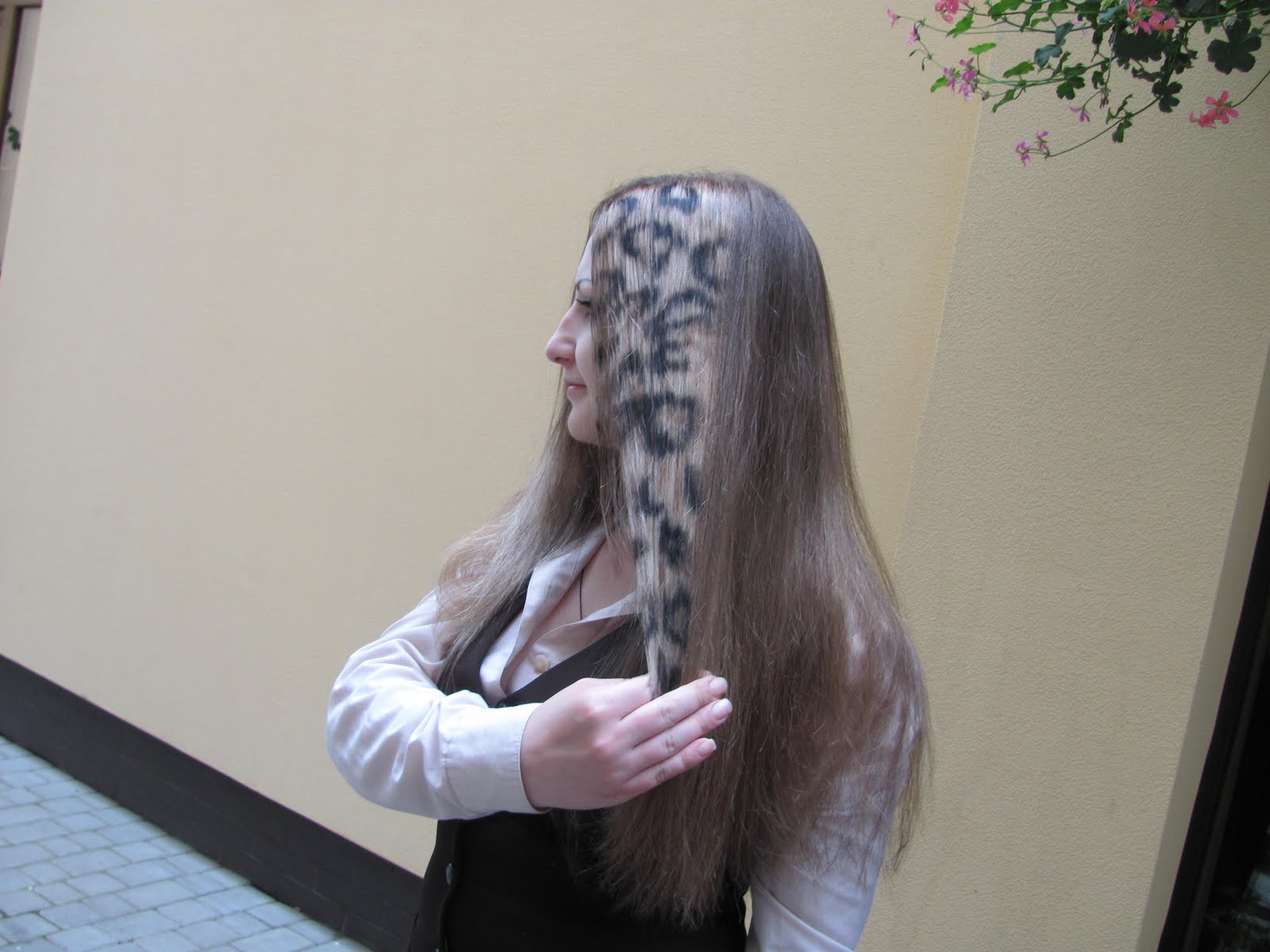
This morning we said goodbye to our hotel and very friendly hotel staff in Stanislau. They were probably the only people we've met and will meet (besides our guide) with such good English-speaking skills. Though, that doesn't mean that they didn't have their Ukrainian quirks. But more on that later. After breakfast we drove back to Kolomyja to see where the Birnberg family business was located, as well as the section of the ghetto that Papa Joe's family was placed in. The street of the family business was a narrow one, a few blocks away from their house and from the main square. It wasn't paved, and many plants on the side of the street were overgrown. This proved to be a very bumpy ride. We had a little more trouble finding the street that the ghetto section was on, since it was, according to a map, just off a different unpaved (and very bumpy) street further from the center of town, but it turned out that the street barely existed: all that was left was a short gravel path mostly filled in with grass and other plants. The ghetto area was probably completely destroyed, and it looked like not too much was rebuilt. We also went back to Papa Joe's house one more time to get a closer look at the surrounding area as well as to take a few more pictures. We did most of this from the car, however, since it started pouring rain! That's when two unleashed dogs appeared out of nowhere and started fighting.Our last stop was at the Sheparowicz Forest, a spot near the town to where most of the Jewish residents of Kolomyja were taken to be shot and buried in mass graves. We lit two memorial candles there, in memory of my great-grandparents. Before we left Kolomyja we stopped at the Pysanky (Traditional Ukrainian painted egg) Museum, a building shaped like a giant painted egg and filled with elaborate painted eggs. They also had little sculptures made out of bread and cake there. It was kind of odd. And made us hungry. Speaking of kind of odd, since we spent the rest of the day in the car traveling to Ternopil, we got to take in more of the typical Ukrainian oddities, such as flocks of ducks congregating on the sides of streets, Ukrainian ladies walking on the side of the road in the middle of nowhere, and potholes that haven't been fixed since Soviet times. Oh, and those cows eating grass on the road median, that's old news. You would think that, like in many European countries, the younger people would speak English. But, from what we've experienced, only a handful do, and some, "only 50-50," like our waiter at dinner tonight. And, like I said, no Ukrainian is free of Ukrainian quirks. The receptionist in our first hotel had cheetah-print dyed hair, because she "just loves this animal." Anyway, I'm sure we'll get to see more of this tomorrow when we visit Zborow, the town where my grandmother, Mama Manya grew up. Back to Mike-n-Ike's, a much needed break from beets and oily potatoes!

Sunday afternoon stroll

Yes, that's a giant egg (museum)
...And she's proud of it!


Saturday, June 18, 2011

Our prayers were answered!

If I didn't mention it before, the hotel we're staying at is located directly next to the pre-war Great Synagogue building, that we knew still housed services every Saturday morning. We woke this morning up to a loud resonating voice, which we assumed would be the Rabbi's from the next building over, but instead turned out to be Lady Gaga's being played at an outdoor "marathon." I say marathon in quotes because the start and finish lines were just across the street from each other and no one was seen running between them. A large crowd was gathered around a few Taekwondo masters jumping over each other. We walked back over to the synagogue for services. They were held upstairs, in what was likely the original main prayer room, but that was obviously renovated/repainted over the years. About the building itself: the whole original building is intact (minus a few decorative towers on the roof), but the front half is divided into various other offices and businesses and only the back half and the top floors belong to the current synagogue. Anyway, the services were held in a room that once held probably a few hundred people, and now held about 20 men and 6 women, including us. The services were all conducted by a Rabbi from another city, while the men in the congregation read mostly from newspapers, not the siddur. It seemed like only a few of them read Hebrew, since when they did follow along or read blessings, it was all in Ukrainian or Russian transliteration. The "Gabbai" there was a lanky old man who, when he wasn't knocking on his bench to tell everyone to stand up or calling out when to say "Amen," spent most of the service coughing phlegm into a handkerchief. It's a good thing I didn't shake his hand. The synagogue's general atmosphere did not seem that foreign to me, since mine at home also consists of old European men and women. Anyway, when the service was over, the Rabbi invited everyone to Kiddush--a small meal in another room. We all sat--separate men and women--at tables pre-set with small plates of salad, and the Rabbi made kiddush over grape juice while everyone else made it over local Vodka. I sat with the Rabbi and a man from California also visiting Ukraine, and we talked a little--me and the other man in English, and us three in Hebrew. My mom sat with the women, who knew no English, no Polish, no Yiddish, and barely any Hebrew. That didn't matter too much, since the Rabbi interrupted often to give a L'Chaim. After we left the synagogue, we spent the rest of the day relaxing and walking around the town. And--wait for it--our luggage finally arrived at our hotel! Though, after it arrived, it was still a lot of fun to go into the clothes shops in town and imagine what we would have to continue wearing if the luggage never came. It was good to see more of the city, which turned out to have a lot of very nice areas--we walked down one wide street that was closed to cars and had beautiful old European buildings on both sides--probably what people refer to as a boulevard. Tomorrow we're going to see a few more things in Kolomyja, and will possibly visit Nadworna, where Papa Joe's brother lived. In the evening we'll travel to Ternopil, a city close to our second destination--Zborow, where my mother's mother, Manya Birnberg, was born and grew up.

No more wearing things like this!

Friday, June 17, 2011

Lost and Found

Papa Joe's family home in Kolomyja

Today we visited Kolomyja (pronounced Kolomeya), the birthplace and hometown of my mother's father, Joseph Birnberg, whom I called Papa Joe. Papa Joe's family owned a textile business that produced a type of rug as well as some clothing, and sold their products all over Europe. Papa Joe, born in 1920, went to a local Polish school as well as a Cheder (religious Jewish school) and then went on to trade school to become an accountant, which he worked as for a year from 1940-1941. Papa Joe decided to join the Russian army so that he could fight against the Nazis, and during the war he both worked as a builder and accountant for the Russian army, and this was how he was able to survive. The rest of his family was murdered in Kolomyja, and Papa Joe learned what had happened in 1945, when he returned to Kolomyja to see much of it destroyed. His house however, was still there when he visited in 1945, as well as when a friend of his went back to visit in 1993. We started off our day by visiting the local historical museum, to see if they could match up the addresses we had for Papa Joe's house and his father's textile business with the current Russian/Ukrainian street names. We spent a lot of time there while Alex convinced the reluctant historian to keep looking for things, and while she was working, we wandered around the museum. It gave us a feel of what a nicely decorated home/building would be like, since it was decorated in the older style. We figured out the new street names, and also came up with a few more destinations: a pre-war synagogue we knew still existed, a different synagogue currently in use, and Papa Joe's Polish school. We found the pre-war synagogue, now a bank, and the other synagogue, at which no one answered the door. We then started to look for the school. We only knew the name of it--Piramowicza, and the historian at the museum said that it was most likely in a building that was currently being used as an employment center. We asked people where this was, but on the way there, I noticed another building that looked familiar to me (from the Yizkor book) as the school building. However, we went to the employment center instead, and when we got there, we asked inside if anyone knew what the building was before the employment center. We talked to the director of the center, who had us call a former director who might know. The former director thought that the center was previously a Russian school, not a Polish school, so instead we went to the building that I thought might have been the right school. We walked around the building to get inside, and a teacher led us to the vice-principal--the building is still being used as a school. He sat us down in his office and began to explain (all of this talking to people, by the way, is through Alex. No one speaks English!) some of the history of the school, and we asked if he knew Piramowicza. He didn't, but a bunch of curious teachers came over to us, and looked on at our documents in pictures, and then were very excited to help us. They took us upstairs to look at pictures of students from the '30s, and then showed us some old pictures of teachers. We sat in a little office for a little while they copied our pictures for their own records and called a former teacher of the school, who they thought might know something. He called us back later, and told us that the employment center was in fact the Piramowicza school--that in the 20's and 30's it was a Polish school, not a Russian one. With all their help, the pieces of the puzzle fit right together...especially when we began to look for the street Papa Joe's house was on, and it turned out to be the very next street over from the school, and the first house on the street. It had the same address as Papa's Joe's, but the street name was different. It was clear that the whole outside of the house was original to Papa Joe's--the style was very old, but everything was in extremely good shape--especially the ornately carved wooden door--and only the windows seemed to be replaced. We went around the house to enter, since the door handle wasn't on the front door, and saw that the house had been divided into two apartments, and where the front entrance was, was turned into a storage room. However, we saw that there was very nice red and blue stained glass on top of the door. We knocked on one of the apartments, and a very large shirtless Ukrainian man opened the door. We explained that Papa Joe used to live in this house, and asked if there was anything on the inside that was original to his house. He said that when they moved in, there was nothing inside the house, and it was he who divided it up into the two apartments and made the storage area. However, he let us look around and take a picture out the window, just like the one we've always had of Papa Joe's family (see below). We spent some more time outside the house, just taking in the fact that this was really where he was! It was such a nice location, right next to the school and the former great synagogue and the main square, and it was (as was the city as a whole) the total opposite of what someone expects from one of these former homes in the "shtetl"--it wasn't like Fiddler on the Roof at all. Instead, it was a beautiful, colorful, clean, well-kept large city. Anyway, we took some "artifacts" from the outside of the home, and then planned to return to Kolomyja on Sunday to visit where Papa Joe's father's business was, as well as Nadworna, a city close by, where Papa Joe's brother lived with his family. Oh--and still no luggage, which means that we've been buying more and more Ukrainian clothes. Let's just say...we'll fit in very well with the style here. See below.

Us in the main square (Rynek) in Kolomyja

Piramowicza School

The Birnberg family outside their home

Us outside the Birnberg family home

"Traditional" Ukrainian clothing

Thursday, June 16, 2011

Day one

Well, we're here! We being my mom, who joined for the first week of the trip to see her parents' hometowns, and me. And what a crazy Eastern European adventure it's been so far. We started off in Chicago by getting to the gate just in time to board towards Newark (to take us to Munich and then Lviv, Ukraine). Minutes after we arrived there, the flight attendants announced that the flight to Newark was canceled due to a mechanical problem and that we would either have to wait 2 hours to board another plane (and miss our connections) or figure out a new plan to get to our final destination. We called our travel agent, who put a new itinerary on our flying records, which the flight attendant thankfully accepted to reissue. It was definitely a small lesson in flexibility and the utility of a travel agent. We got a quick bite to eat before our earlier-than-expected international flight, since now we would be flying from Chicago, to Frankfurt, to Warsaw, to Lviv. The only problem was, that by the time our flight to Frankfurt got moving, we were a little late, and when we landed, we only had about 45 minutes before our connecting flight to Warsaw was to depart. We tried to get off the plane quickly, but people seemed to stroll down the aisles as they made their way off the plane. The next 40 minutes was an adventure in itself. Many people claim that they've been to a country just because they've been to that country's airport, even if they never stepped foot outside. We had the opposite experience: instead of going into the airport, passing through passport control, moving through the gate, and onto the plane, we barely went inside. We were transported via bus to passport control, then sped off to a room down a hall and up a flight of stairs (up which we ran, since "you have two minutes!" said a flight attendant on the bus) where they checked our tickets, then directly to the plane. It was the most confusing 40 minutes ever, and we really had to trust the flight attendants and the people running ahead of us to know where we were going, since by this point, there were so many different kinds of people that you really didn't know what language to speak. Anyway, the plane turned out to be the right one, and we landed in Warsaw just over an hour later. It was not what I expected at all! The airport was very modern and, from what we saw of it, everything looked very clean and new and nice! Anyway, we spent some time there eating, people-watching, and converting money, and then we got on--you guessed it--a bus to get to our final plane that would take us to Lviv. This wasn't just any plane. It was a 48-seater (at the most) plane with two giant propellers on each side. This proved to be a bumpy and extremely strange plane ride, in which we slept pretty much the whole time, but we definitely felt like we were already in a very foreign country. As we approached Lviv, we got the feeling of, "now this is more like I thought it would look." Farms, old houses, and a tiny--and I mean one-gate-tiny airport confirmed that we were back to the old country. Back in the old country, by the way, minus our luggage, lost on the way. Minor detail? Anyway, after meeting Alex (our guide) and much of him translating Ukrainian into English (who speaks English around here?) we began our long drive to Stanislau, aka Ivano Frankivsk, a small city located near our first destination. The drive there took us through small towns, mountains, but mostly fields and fields--empty, or filled with haystacks, or filled with old Ukrainian ladies. On the note of old Ukrainian ladies, they love walking on the side of the road, but not just the side of the road, more like on the road itself. On the note of the roads, although they're two lanes most of the time (theoretically to allow one for each direction of traffic), anyone can use whatever lane he wants. And we did just that. Anyway, we spent the evening wandering around Stanislau buying socks and outlet adapters, and now we're going to sleep before hitting our first stop on the journey tomorrow, Kolomyja--my grandfather Joseph Birnberg's hometown. More later!


The main square in Stanislau


The (tiny) plane to Ukraine


Us after buying socks in Stanislau